
May 4 – 8, 2026 / Graz / Austria
We are excited to announce the 5th edition of the International Design Week at the Institute of Design & Communication, FH JOANNEUM University of Applied Sciences Graz. Following the success of our previous themes – The Prepper, mutate or mute, Design Science F®ictions, and unCOMMON underGROUND – we now explore the intricate layers of Post-Human Resources.
Workshop Theme
In an age when "human resources" is no longer just about people, bodies and labor, the 2026 edition of International Design Week at FH JOANNEUM invites you into the realm of Post-Human Resources: where design, ethics, technology and ecology remix the very idea of what "resource" means.
What happens when algorithms become coworkers, when nature becomes partner, when care is distributed across human, non-human and more-than-human systems? What responsibilities emerge when bodies, machines and ecosystems negotiate labor, value and meaning together?
We'll ask: How can design re-imagine labor beyond exploitation? How can it invent resource-models for multispecies worlds? How can we tap into "resources" not just as extraction but as flourishing? With workshops, cross-media collaboration and international guests, this week will unpack post-human practices, speculative economies and ethical infrastructures.
Join us to rethink "resources" for worlds beyond human-centric frames: to design with biology, machine, matter and meaning in one ecosystem of care, critique and possibility.
We look forward to your engaging workshop ideas at the International Design Week 2026!
Birgit Bachler, Head of Bachelor's program Information Design
Daniel Fabry, Head of Institute Design and Communication, Head of Master's Programs
WORKSHOPS AT A GLANCE
| WS#1 | Making the Invisible Visible: Designing Systems from Natural Processes |
| WS#2 | Future Rhymes. Audio-Visions of the Post-Human World |
| WS#3 | Live after life (Infographics Beyond Use) |
| WS#4 | Expanded Cinema |
| WS#5 | Delta · Common City |
| WS#6 | PLAYS! — Post-human Legacies Activating Yielding Systems |
| WS#7 | Mutual Aid Communication Toolkit |
| WS#8 | Embodied Algorithms: Bodies as Sensors and Interfaces |
| WS#9 | Designing Post-Human Storyworlds: Interactive Audio Narratives |
| WS#10 | Collaborative Intelligence Workshop |
WORKSHOP DETAILS
WS#1 — Making the Invisible Visible: Designing Systems from Natural Processes
Marijke De Vuyst / Head Visual Design Lab / Department Media, Design & IT / AP University of Applied Sciences & Arts Antwerpen / BEL
Room: AP152.01.107
Many processes that shape our world are difficult to see: growth, cycles, dependencies, rhythms and interactions between different elements. Yet these processes structure the environments we live in. In this workshop, you explore how graphic design can reveal these invisible dynamics. Through observation, research and experimentation, you translate natural or systemic processes into visual rules, structures and graphic systems.
Instead of illustrating nature directly the focus is on understanding how systems work and how relationships between elements can become visible through design. You begin with quick analogue experiments and gradually develop visual systems that can evolve into printed or digital outcomes.
Along the way, you document your observations, sketches and experiments in your sketchbook, making both the system and the development process visible.
Within the context of Post-Human Resources, the workshop invites you to reflect on how design can visualize connections between humans, environments and other living systems.
Learning outcomes
During this workshop you learn how to observe and analyse natural or systemic processes and translate them into rule-based visual structures. Through experimentation you develop a graphic system that reveals relationships, rhythms or interactions within a process. You document your observations, sketches and experiments in a sketchbook making the development of your design system visible. The outcome can take different forms, for example: printed graphic systems, generative posters, or simple interactive visualisations accompanied by a documented design process.
Creative results
The workshop does not focus on teaching specific software. Instead, tools are chosen in relation to the ideas you want to explore. You are encouraged to work with the tools you already know and feel comfortable with. Depending on the direction of the project, you may use graphic design software, generative tools or other digital or analogue methods. The workshop also builds on the collective knowledge of the group: everyone is invited to share their skills and approaches, allowing different tools and workflows to emerge organically during the process.
Students should bring
- Laptop
- If available: Sketchbook and basic drawing materials (pens, pencils, markers)

About Marijke De Vuyst
Hello, I'm Marijke, a graphic designer and lecturer at AP University of Applied Sciences and Arts in Antwerp, Belgium. Alongside teaching, I work as a designer for different clients. In my courses on graphic design and typography, I encourage students to question their design decisions and reflect on why they make certain choices. I'm interested in experimentation and in exploring how design systems and processes can lead to unexpected visual outcomes.
WS#2 — Future Rhymes. Audio-Visions of the Post-Human World
Katarzyna Figat and Kajetan Zakrzewski / Assistant Professors / Department of Sound Engineering / The Feliks Nowowiejski Academy of Music in Bydgoszcz / POL
Room: AP152.03.307a
"History does not repeat itself, but it often rhymes" (Mark Twain).
The concept of the workshop is based on the assumption that the reality in which we live is created mainly according to human needs — e.g. cities consist of residential buildings that serve to satisfy the needs of accommodation, safety and protection from the cold; the food production and supply chain makes it possible to satisfy hunger. During the workshops, we want to consider how reality will change if humans cease to be the dominant factor shaping it and create visions of an alternative future. If we accept Twain's statement, we can assume that the world in 100 or 500 years will not be radically different, but it will arise from the world we know today. So: how does the future rhyme with present?
The answers to these and other questions will be the starting point for creating a kind of collage: an artistic combination of the present state rhyming with the selected future vision.
Learning outcomes
- Developing creative thinking skills
- Basic ability to record and edit spherical materials (audio and video)
- Basic ability to use AI tools for image generation
- The ability to search for and select sounds and music or generate them using AI tools, and to edit and mix them
- Developing the ability to use sound and music to shape the audiovisual narration
Creative results
Participants will create their own vision of a post-human world, which will be expressed in the form of spherical photos combined with a futuristic soundscape. The photos and dedicated soundscape will be compiled into a 360° film.
Students should bring
Laptops with installed software: dear VR PRO, Spatial Connect installed with Spatial Adapter, Reaper, Meta Horizon app, OBS Studio, Soundly app.
About Katarzyna Figat
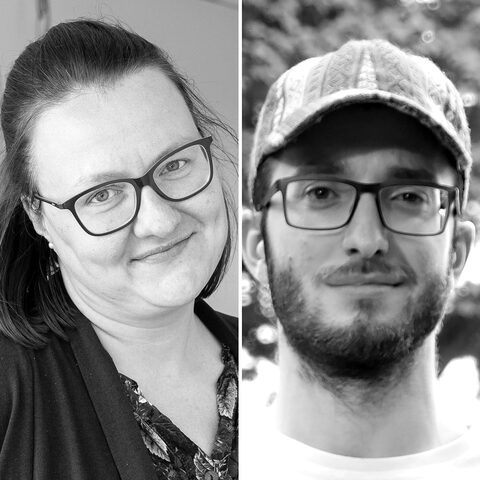
Katarzyna Figat, Ph.D. in music arts (film sound engineering). Works as an assistant Professor at the Feliks Nowowiejski Academy of Music in Bydgoszcz, as well as the lecturer at the National Film School in Łódź, where she teaches sound in film to students of film editing as well as coordinates the new film sound engineering degree. Film sound engineer and passionate film expert. She is engaged in intense academic activity, taking part in conferences and academic projects, as well as publishing. She works as a music supervisor and sound editor for feature films, documentaries and TV series.
About Kajetan Zakrzewski
Kajetan Zakrzewski, Ph.D. is a sound designer specializing in film post-production and VR productions. He works as a lecturer at the Feliks Nowowiejski Academy of Music in Bydgoszcz. Over the past 10 years, his work on VR projects, films, and series has been presented and awarded at international festivals such as DOK Leipzig, Helsinki Biennial, Slamdance, and the Grand Video Awards. Since 2015 he has also been a member of the comedy group Niplodram, where he writes and produces short films and performs as a theatrical improviser.
WS#3 — Live after life (Infographics Beyond Use)
Maaike Hamelynck / Lecturer Graphic & Interaction Design, Coordinator Department of Design / Minerva Art Academy, Hanze University of Applied Sciences / NLD
Room: AP152.02.209
A hands-on workshop about turning data into visual stories. Instead of presenting dry facts, students learn to create poetic and experimental infographics that explore live after life of things such as garbage, leftover energy, memory, and digital traces.
Starting with basic infographic skills, students research post-human resources and transform their findings into visual narratives. They create tactile zines using paper, folding, and sequencing, then develop these into clear, public poster designs.
By the end of the course, students can turn data into visual concepts, use infographics for storytelling, and combine research with graphic design and illustration.
Learning outcomes
Design and research come together in the workshop. The students learn to convert data into a basic visual concept to tell a story and apply the acquired knowledge to create one or more designs and/or research projects. Students use infographics as storytelling tools, practice visual thinking, diagramming and sequencing, experiment with zine formats and tactile design, and translate narrative zines into poster compositions.
Students should bring
- Laptops for layout and documentation (InDesign, Illustrator etc.)
- Paper, and all types of recycled materials (magazines, books, fabric, cardboard etc.)
- If available: Cutting tools, glue, markers, pens, paint, ink etc.
About Maaike Hamelynck
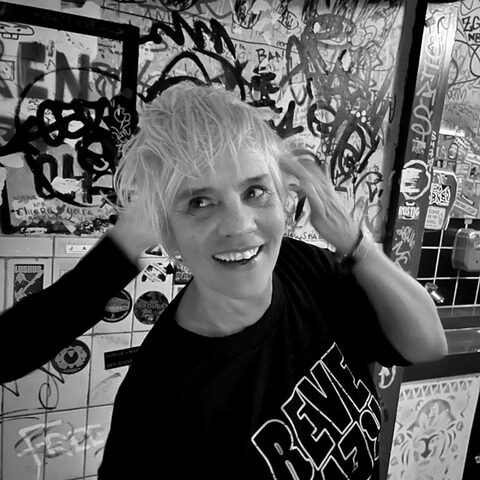
Maaike Hamelynck is a graphic designer with an MA in Brand, Design and Reputation Management. She runs a design studio and teaches. Next to designing media, her interests are visualizing stories behind people, products, and institutions through infographics, preferably in collaboration with students.
WS#4 — Expanded Cinema
Hanan Kaminski / Head of Master's Program in Design for Technological Environment / Faculty of Design, Holon Institute of Technology / ISR
Room: AP152.02.203
This 3-day workshop merges the rigor of traditional filmmaking with the disruptive potential of Artificial Intelligence. The goal is to produce a 30-second short film (animation or live-action) while exploring the birth of a new narrative and cinematographic language. By blurring the lines between human intent and algorithmic generation, we will define what "Expanded Cinema" means in the age of AI.
The methodology follows a professional production pipeline:
- Pre-production: Concept development, scripting, character/scenic design, and creation of a precise storyboard/videoboard.
- Production: Generating and refining scenes using AI tools, strictly guided by the pre-production assets.
- Post-production: Final editing and immersive soundtrack creation.
The project explores the mutation of creative labor. By positioning the students as the curators and conductors of algorithms, we examine the human role within a "workforce" extended by machines. This "Expanded Cinema" becomes a post-human collaboration where the digital "resource" actively reshapes the storytelling process.
Learning outcomes and creative result
Students will learn to master AI not as a substitute, but as a creative lever serving a directorial vision.
- Skills: AI-assisted art direction, hybrid workflow management, and the exploration of new visual grammars.
- Hands-on Result: A 30-second film showcasing a unique, contemporary aesthetic and a pioneering narrative approach.
Students should bring
- Laptops and active Google AI Pro subscription (free trial available)
About Albert Hanan Kaminski
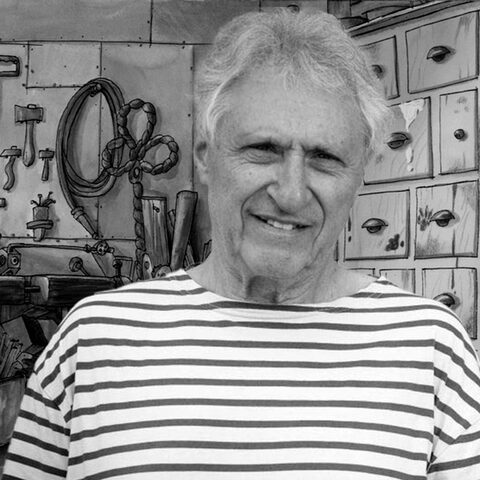
Albert Hanan Kaminski is an acclaimed director whose animated feature films, including The Legend of King Solomon, The Real Shlemiel, and the Pettersson and Findus saga, have captivated audiences in over 60 countries. A master storyteller, his work spans iconic TV series such as Sesame Street and The Wumblers. In 2015, his global impact was honored with the prestigious Pulcinella Career Award at Venice's Cartoons on the Bay. Today, he bridges cinematic artistry and academia as a Professor at HIT – Holon Institute of Technology, heading the Design Master program for Technology Surroundings.
WS#5 — Delta · Common City
Playing and designing non-verbal graphic systems for post-human cities
Melani Lleonart García & Álvaro Sanchis Gandia / Professors, Painting Department / Universitat Politècnica de València / ESP
Room: AP152.03.303
Delta · Common City explores graphic design as a non-verbal visual language capable of operating within spatial environments. The workshop is framed through a speculative post-human scenario: after a global climate emergency, participants design a self-sufficient city inhabited by diverse populations without a shared spoken language. Communication, orientation, and coexistence rely entirely on visual systems.
Through a playful, game-based world-building process, participants collaboratively define the city's structure, resources, and social dynamics. Graphic design is approached as a critical infrastructure that mediates between human, non-human and environmental systems.
Participants then develop a text-free visual communication system using symbols, color, form and graphic rules, applying it to spatial contexts such as signage and environmental graphics. The workshop positions graphic design as a resource that organizes space, behavior, and meaning within a complex post-human ecosystem.
Learning outcome and creative result
Participants learn to design graphic communication systems without text, using symbols, color, form, and spatial logic. They develop systemic thinking, exploring graphic design as a cross-cultural language that operates across spatial environments. The workshop strengthens skills in visual system design, speculative thinking, and collaborative design processes. The outcome is a collective prototype: a non-verbal visual communication system applied to a speculative city through signage, environmental graphics, and visual documentation presented in an exhibition format.
Students should bring
- Laptops
About Melani Lleonart
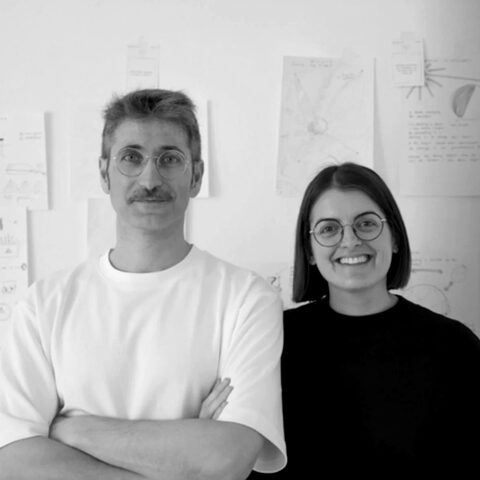
Melani Lleonart holds a PhD in Art and Design and is Vice-Dean for Professional Development and Industry Relations at the Faculty of Fine Arts, Universitat Politècnica de València. She directs the Bachelor's Degree in Design and Creative Technologies and coordinates the Master's Degree in Design and Illustration. Her teaching and research focus on visual identity, editorial design, design theory, inclusive design and sustainability. She is co-director of the research journal EME Experimental Illustration, Art & Design and co-founder of Pedra Design Studio.
About Álvaro Sanchis
Álvaro Sanchis holds a PhD in Fine Arts and Design. He is Deputy Director for Teaching at the Department of Painting and Director of the Diploma in Interface Design at the Faculty of Fine Arts, Universitat Politècnica de València. He teaches graphic design, UX and interface design in the Bachelor's Degree in Design and Creative Technologies and in the Diploma in Interface Design. His research focuses on visual communication, digital interfaces and graphic systems. He is co-founder of Pedra Design Studio.
WS#6 — PLAYS!
Post-human Legacies Activating Yielding Systems
Emilio Lonardo / Lecturer and Research Fellow / Design Department / Politecnico di Milano / ITA
Room: AP152.01.105a
PLAYS! explores play as a form of knowledge shared by humans, animals and more-than-human systems. Rather than aiming at predefined outcomes, the workshop activates a system of tools, rules and constraints that allow ideas, groups and projects to emerge through interaction. Participants work with conceptual devices such as cards, roles and speculative resources that introduce human and non-human actors and create dynamics of negotiation, care and conflict to generate draft ideas. Group formation happens through an investment session where participants allocate symbolic budgets to ideas they want to pursue. The process follows the ABCoDE framework developed within Design Open Spaces, supporting an open, relational and transformative learning environment where design becomes a living system rather than a sequence of tasks.
Learning outcome and creative result
Participants learn to design systems rather than isolated artifacts and gain experience working with open-ended processes. They develop skills in collective decision-making, speculative thinking and translating abstract dynamics into spatial, narrative, interactive or performative forms. Outcomes may include tools, games, installations, campaigns, objects or concepts. The emphasis lies on "leftputs": legacies that projects leave behind in the form of methods, frameworks or new possibilities for future design actions.
Students should bring
- Laptops
- If available: basic materials for writing, drawing and collective prototyping such as pens, markers, pencils
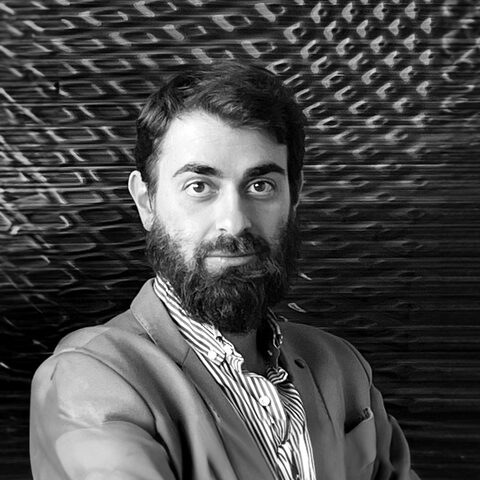
About Emilio Lonardo
Emilio Lonardo is a designer, researcher and educator working on the relationship between people, space and more-than-human systems. He holds a PhD in Design and teaches at Politecnico di Milano. He is founder of D.O.S. – Design Open Spaces, a design operating system exploring gentle technologies, relational design and experimental methodologies such as ABCoDE. His work combines research, design practice and speculative approaches to create new ways of imagining collective futures.
WS#7 — Mutual Aid Communication Toolkit
Ana Matić, Professor and Miloš Nikolić, Teaching Assistant / Faculty of Fine Arts Cetinje, University of Montenegro / MNE
Room: AP152.02.210
Let's imagine an ideal future cohabitation – the post-human era, where humans, technology, and nature are interconnected and coexist. What happens when one of them collapses? How society functions in the times of crisis. The workshop places participants into a fictional scenario, set in moment, a city which loses electric power on a regular basis.
Participants will investigate a Post-Human Society suffering infrastructural collapse, how graphic designers can rethink communication when screens go dark, the internet is unavailable, and electricity is limited. How can we use low-tech, non-digital methods to reshape communication? What form does the concept of a social network take, once there is no internet or electrical devices? What could we, as designers, do for our local community?
The aim of the workshop is to rethink communication tools, design and cooperation methods and infrastructure in times of limited resources.
Learning outcome and creative result
Participants will:
- Analyze communication challenges and networks beyond technology.
- Experiment with low-tech communication methods adapted to limited-resource environments.
- Design and prototype DIY low-tech communication tool or visual system for the local community (signage, mapping system, infographic, or analog social network…).
- Collaborate with other participants to develop collective responses to communication challenges.
- Reflect on the social role of designers in supporting community resilience, cooperation, and mutual aid during times of crisis.
Students should bring
- Laptops
- Phones, pencils and paper
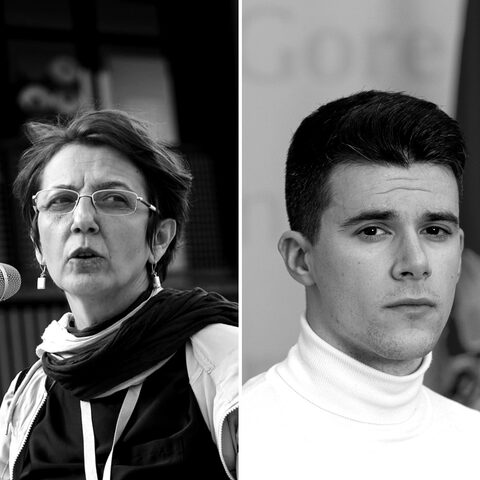
About Ana Matić
Professor at the Faculty of Fine Arts Cetinje, University of Montenegro. She has 30 years of experience in design education. In the last 20 years, she organized and participated in many exhibitions, conferences and workshops in the country and abroad. She is initiator and coordinator of FLUID Design Forum Montenegro since 2013. Founder and President of NGO FLUX, since 2018.
About Miloš Nikolić
Teaching assistant at the Faculty of Fine Arts Cetinje, University of Montenegro. Currently pursuing a MA degree at the same institution. He works as a graphic designer, focusing on projects that relate to the cultural sector. He is a member of the organizing team for the FLUID Design Forum, and various other, student initiated, projects.
WS#8 — Embodied Algorithms: Bodies as Sensors and Interfaces for natural and man-made signals
Carla Molins-Pitarch / Lecturer & Researcher / Digital Design and Multimedia Technologies (CITM) / UPC BarcelonaTech / ESP
Room: AP152.EG.002
The workshop focuses on designing sensing-based human extensions that read, translate, and respond to patterns present in natural systems, human bodies, and man-made systems. Rather than speculating on future cyborgs, participants work with existing signals, such as biological rhythms, environmental conditions, and behavioral patterns, to develop tangible interfaces that foster awareness, coordination, and care of our surroundings.
Through experience design, electronics, and sensor-based data, students prototype wearable or spatial systems that make otherwise invisible patterns perceptible and experientially accessible, positioning humans as active participants within larger algorithmic and ecological systems rather than isolated operators. This workshop frames sensing as a design method for understanding interdependence between humans, technologies, and environments where participants design interfaces that translate complex systems into lived, experiential feedback.
Learning outcome and creative result
Participants will experiment with physical computing and sensing through hands-on, exploratory prototyping. Working in interdisciplinary groups, they will collaborate across storytelling, craft and interactive design to experiment with sensors, motors and mixed media. The creative outcome will be a set of small-scale, experimental wearable or spatial prototypes that respond to real-world signals such as movement, sound, light or bodily rhythms. These works are exploratory rather than finished products and are shown through process, testing, and collaboration.
Students should bring
- Laptops with Arduino IDE
- No Arduino experience required, but it is recommended to achieve blinking an LED (Arduino 101) before the workshop.
- Students can bring objects for their enhanced senses (plants, fruits, clothes, …) or things they really like.

About Carla Molins-Pitarch
Carla Molins-Pitarch, PhD, MFA, is an experience designer, creative technologist, and researcher working at the intersection of design, technology, and science to bring a tangible instance to complex concepts. Currently, researcher at the Image Processing and Multimedia Technology Center, UPC (DiCode: digital culture and creative technologies research group). Her practice has been centered on visualizing scientific concepts through haptic and interactive experiences, creating immersive experiences, including kinetic-robotic and award-winning creative technology projects. Her work and research have been presented and exhibited since 2013 in Spain, Finland, Switzerland, the USA, the UK, Belgium, Germany, France, Malta, and Austria.
WS#9 — Designing Post-Human Storyworlds: Interactive Audio Narratives
Niklas Rönnberg / Senior Associate Professor / Division for Media and Information Technology / Linköping University / SWE
Room: AP152.01.116
Step into a near-future in this workshop, where you'll explore storytelling beyond the linear by creating interactive, location-based audio narratives that adapt, branch, and respond to listeners' movements.
You'll prototype branching storylines and multi-perspective plots, learning how to map narrative structures that shift with each decision. At the same time, you'll dive deep into sound design, combining field recordings and foley sound with film and narrative music to build immersive sonic worlds. You will also explore using AI for sound design, trying different tools for creative use, while reflecting on AI from different critical perspectives. Using mobile phones, web interfaces, GPS, microphones, and various audio editing software, you'll craft stories that unfold through movement, turning physical space into part of the narrative system.
Learning outcome and creative result
In this workshop, you will learn to design interactive, non-linear narratives with branching storylines and meaningful choices. You'll combine AI-based tools with traditional sound design techniques for voice creation, recording, and sonic world-building, and build simple GPS-triggered audio experiences.
By the end, you will have created a prototype of an interactive audio storywalk with branching storylines: a spatial, responsive piece shaped by listener movement and decisions, showcasing your skills in narrative architecture, immersive storytelling, and sound design.
Workshop website: niklasronnberg.github.io/graz2026
Students should bring
- Laptops
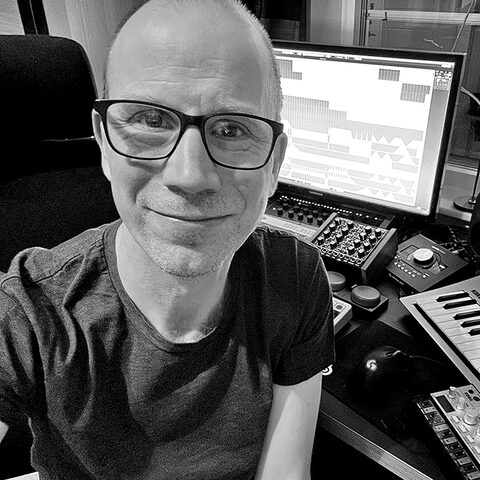
About Niklas Rönnberg
I am a Senior Associate Professor in Sonification and Sound Design at Linköping University in Sweden, with a background in Media and Communication Studies. I teach Sound Technology and Procedural Sound Design, Music and Film Production, Visual Storytelling, and Physical Interaction Design and Prototyping. My research interests are in sonification, sonic interaction design, and speculative/critical sound design. I love music and sound design, and enjoy tinkering with synthesizers, sound technology, computers, and music electronics.
WS#10 — Collaborative Intelligence Workshop
Nitzan Waisberg / National Head of Design (Visual Communication) / JMC Academy / AUS
Room: AP152.03.302
The ideologies governing the exploitation, control and distribution of resources have run their course. Just as industrialisation allowed western societies to see the abomination of slavery as unacceptable exploitation of "human resources" — stimulating a profound reorganising of society from agriculture to civil rights — so AI models offer an opportunity to reexamine the exploitation, control and distribution of resources in our time and the ideologies that have normalised these.
The underlying assumption of the workshop is that change requires not only understanding the problem but developing and communicating an alternative. The workshop begins with an alternative preliminary concept: Collaborative Intelligence. AI technologies might be designed as part of symbiotic mutually supportive ecosystems modelled after the Mother Tree and mycelium networks in a forest system. This — not free markets, states or military might — will regulate resources for optimal thriving.
The goal of the workshop is to make Collaborative Intelligence tangible to allow ordinary people to engage with an alternative vision, develop it or propose better alternatives.
Learning outcome and creative result
Workshop outcomes may include a campaign, a manifesto, policy recommendations, a political party, an exhibition or a Collaborative Intelligence trans-species declaration. These may be presented through graphic design, space installation, video or other engaging communicative means.
The workshop will employ the design thinking process but expand it beyond human-centred design to include AI and non-human species into all stages of the process. This in itself will be exploratory work that can be shared as an outcome.
- Day 1: Understanding the problem: dimensions of resource exploitation, control and distribution today and in historical context. Introduction to Collaborative Intelligence and focus on particular dimensions.
- Day 2: Cross-species ideation, prototyping and testing.
- Day 3: Refinement of outcomes and presentation prep.
Students should bring
- Laptops
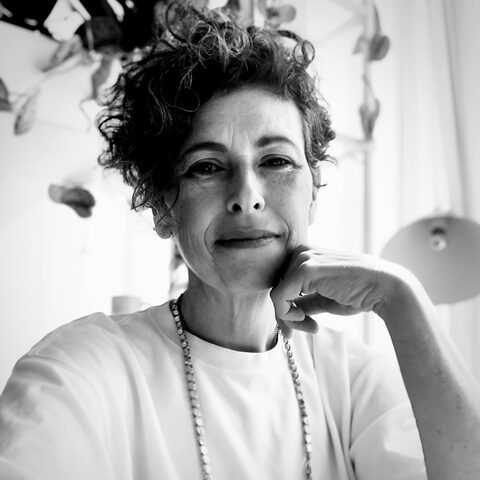
About Nitzan Waisberg
Nitzan is a human-centred design expert and former Consulting Professor at Stanford University's d.school. She is currently National Head of Design (Visual Communication) at JMC Academy in Australia. Educated as an industrial designer (Bezalel) and design historian (Royal College of Art) she is interested in the interplay of human needs and motivations with emerging technologies and social structures. She is co-founder the Delta pre accelerator program which launched startups that raised over $68M and has advised NGOs, multinationals and startups, some of which reached unicorn status.
PROGRAM
Program Students
-
Mon, May 4Monday, May 4 (ONLY for participants of the Blended Intensive Programme)5 pm — WELCOME International Guest Students from Spain, Poland and the Netherlands.
Alte Poststraße 152, room 308, 3rd floor
-
Tue–ThuTuesday, May 5 – Thursday, May 79 am to 5 pm — WORKSHOP DAYS 1 – 3. Warm up & research, experiment, consolidate & finalize. All workshops take place at Alte Poststraße 152.
-
Tue, May 5Tuesday, May 57 pm — “International Design Week” students’ PARTY.
Univiertel, Moridal Bar, Elisabethstraße 31
-
Fri, May 8Friday, May 810 am – 1 pm — FINAL PRESENTATION. All groups present the outcome of their workshop; 10 min per workshop.
HELMUT LIST HALLE, Halle D, Waagner-Biro-Straße 98a
Program Lecturers
-
Mon, May 4Monday, May 4
10 am – 5 pm — Opening of the INTERNATIONAL DESIGN WEEK on the subject of POST-HUMAN RESOURCES at the Institute of Design and Communication.
Alte Poststraße 152, room 401, 4th floor- INTRODUCTION of all participants
- KEYNOTE Nitzan Waisberg (JMC Academy, AUS) on Human Centered Design in Times of Crisis, activities and discussions
- NETWORKING with all participants and the team of idk
- Building & Campus TOUR — visit of workshop rooms with idk-buddies
-
Tue, May 5Tuesday, May 5 / Workshop Day 1 (warm up & research)- 9 am – 12 pm — WORKSHOP with students
- 1 pm – 4 pm — Workshop (working time for students)
- 4 pm – 5 pm — Daily DEBRIEF
All workshops take place at Alte Poststraße 152.
7 pm — DINNER with international guest lecturers.
Restaurant Wildmoser, Grüne Gasse 17
-
Wed, May 6Wednesday, May 6 / Workshop Day 2 (experiment)- 9 am – 12 pm — WORKSHOP with students
- 1 pm – 4 pm — Workshop (working time for students)
- 2 pm – 3 pm — Optional visit of “International Poster Triennale 4th Block: Nuclear Scar” and photo exhibition „Heroes without glory“ on 40 years of Tscherobyl disaster with Illya Pavlov. Meeting point: in front of City Hall, Hauptplatz 1
- 4 pm – 5 pm — Daily DEBRIEF
All workshops take place at Alte Poststraße 152.
-
Thu, May 7Thursday, May 7 / Workshop Day 3 (consolidate & finalize)- 9 am – 12 pm — WORKSHOP with students
- 1 pm – 4 pm — Workshop (working time for students)
- 4 pm – 5 pm — Daily DEBRIEF
All workshops take place at Alte Poststraße 152.
-
Fri, May 8Friday, May 810 am – 1 pm — FINAL PRESENTATION. All groups present the outcome of their workshop; 10 min per workshop.
HELMUT LIST HALLE, Halle D, Waagner-Biro-Straße 98a2 pm – 4 pm — Farewell LUNCH with international guest lecturers.
Restaurant Grazie Roma, Hotel Daniel, Europaplatz 1
FINAL PRESENTATIONS
On the last day of the International Design Week all the groups present the outcome of their workshop in a 10-minute presentation.
Friday, May 8, 10 am – 1 pm
HELMUT LIST HALLE, Halle D, Waagner-Biro-Straße 98a, Graz
Submission Requirements
Please submit ONE presentation per workshop.
- Deadline: May 7, 10 pm
- Format: 16:9 / 1920 x 1080 px
- File formats: Keynote, Powerpoint or PDF
- Upload on MS Teams: IDK International Design Week 2026 / Final presentations / Files
For special requests please contact Roman Pürcher: roman.puercher2@fh-joanneum.at
ABOUT US
Institute of Design & Communication (idk)
The Institute of Design & Communication, one of the largest institutes at the FH JOANNEUM, University of Applied Sciences, with around 300 students, contributes to the creative dynamics of the city of Graz. Competence in design, human-centered methods and research are important elements in our interdisciplinary education. Research at the institute encompasses contemporary design challenges in society in collaboration with industry and other academic institutions. The institute offers a Bachelor's program in Information Design and Master's programs in Exhibition Design and Communication, Media, Sound and Interaction Design. Our students learn to understand economic, social, cultural and technological backgrounds to effectively create design solutions for society as they shape tomorrow's worlds.
Institute of Design & Communication
www.fh-joanneum.at/idk
CONTACT
Andrea Schlacher
International Coordinator
Institute of Design and Communication (idk)
FH JOANNEUM Gesellschaft mbH
Alte Poststraße 152
8020 Graz / Austria
andrea.schlacher@fh-joanneum.at
www.fh-joanneum.at/idk
Instagram: @fh_joanneum_idk
Medieninhaber
Institut für Design und Kommunikation
FH JOANNEUM Gesellschaft mbH
Alte Poststraße 149
A-8020 Graz
T: +43 316 5453 – 8640
E: ind@fh-joanneum.at
Firmendaten:
Rechtsform: GmbH
Firmensitz: Graz
Firmenbuchgericht: Landesgericht für ZRS Graz
Firmenbuchnummer: FN 125888 f
UID-Nr.: ATU 42361001
Bankverbindung:
Raiffeisen-Landesbank Steiermark AG
Radetzkystraße 15 – 17, 8010 Graz
IBAN: AT24 3800 0000 0565 0650
BIC: RZSTAT2G
Geschäftsführung:
T: +43 316 5453 – 8880
Organisation
Im Land Steiermark fungiert die FH JOANNEUM Gesellschaft mbH als Trägerorganisation der FH JOANNEUM. Gegenstand des Unternehmens ist die Erhaltung von Fachhochschul-Studiengängen im Sinne des Fachhochschulgesetz – FHG (Bundesgesetz über Fachhochschulen). Die Gesellschaft ist gemeinnützig im Sinne der BAO (Bundesabgabenordnung).
Das Stammkapital der Gesellschaft beträgt 4 Millionen Euro. Es wird gehalten von:
• Land Steiermark (Mehrheitsgesellschafter): € 3.004.000,-
• JOANNEUM RESEARCH Forschungsgesellschaft mbH: € 596.000,-
• Steirische Wirtschaftsförderungsgesellschaft mbH (SFG): € 400.000,-
Der Gesellschaftsvertrag der FH JOANNEUM Gesellschaft mbH sieht als Organe der Gesellschaft vor:
• Geschäftsführung
• Generalversammlung
• Aufsichtsrat
Darüber hinaus gibt es in den einzelnen Fachhochschul-Studiengängen Leiterinnen und Leiter des Lehr- und Forschungspersonals (Studiengangsleitungen) sowie das 2007 eingerichtete Fachhochschulkollegium.
Firmenstruktur und Organe
Unternehmensgegenstand der FH JOANNEUM Gesellschaft mbH ist die Einrichtung, Erhaltung und der Betrieb von Fachhochschulstudiengängen im Sinne des FHG sowie darüber hinausgehend die Durchführung von Aus- und Weiterbildungsmaßnahmen und der Betrieb von postsekundären und posttertiären Bildungsangeboten.
Aufsichtsbehörde:
Agentur für Qualitätssicherung und Akkreditierung Austria
Anwendbare Rechtsvorschriften und Zugang dazu:
Akkreditierungsbestimmungen gemäß Fachhochschulgesetz, Hochschul-Qualitätssicherungsgesetz, Hebammengesetz, MTD-Gesetz, GuK-Gesetz und jeweils dazu ergangener Verordnungen auffindbar unter https://www.ris.bka.gv.at und https://www.aq.ac.at
Geschäftsführung
Die Kompetenzen und Verantwortungsbereiche der Geschäftsführung sind in einer Geschäftsordnung festgelegt. Die Geschäftsführung vertritt die Gesellschaft nach außen und ist zur Abgabe von rechtsverbindlichen Erklärungen ermächtigt. Der Geschäftsführung direkt zugeordnet sind die zentralen Planungs-, Verwaltungs-, Controlling- und EDV-Funktionen der FH JOANNEUM.
Geschäftsführung:
• Rektorin (FH) FH-Prof. Dr. mont. Corinna Engelhardt-Nowitzki, wissenschaftliche Geschäftsführerin
• Mag. Martin Payer, MBA, kaufmännischer Geschäftsführer
Aufsichtsrat
Seit Mai 2002 hat die FH JOANNEUM Gesellschaft mbH einen Aufsichtsrat, der seine Tätigkeit nach den Vorschriften des Gesetzes über Gesellschaften mit beschränkter Haftung, entsprechend den Bestimmungen des Gesellschaftsvertrages und auf Basis von Beschlüssen der Gesellschafter ausübt. Dem Aufsichtsrat gehören derzeit an:
Vorsitzender
• Mag. Dr. Markus Tomaschitz, MBA
Stellvertretender Vorsitzender
• Mag. Friedrich Möstl
Sonstige Mitglieder:
• Mag. Claudia Gunzer
• Mag. Doris Maria Jurschitsch
• Univ.-Doz. Dr. phil. Martin Moll
• Mag. Gernot Pagger
• Mag. Daniela Schachner-Blazizek, MPA
• Mag. Gerlinde Siml
• Anna Spielhofer
Belegschaftsvertreter:innen:
• Brigitte Loder-Fink, MSc
• DI Takashi Linzbichler
• FH-Prof. Dipl.-Ing. Dr.techn. Peter Salhofer
• FH-Prof. Mag. Dr. Kaja Unger
• Mag. Eva Zischka
Fachhochschulkollegium
Dem Kollegium gehören neben der Rektorin (FH) oder dem Rektor (FH) und der Vizerektorin (FH) oder dem Vizerektor (FH) sechs Leiterinnen oder Leiter der jeweils eingerichteten Fachhochschul-Studiengängen, sechs Vertretinnen oder Vertreter des Lehr- und Forschungspersonals sowie vier Vertreterinnen oder Vertreter der Studierenden der Fachhochschul-Studiengänge an.
Rektorin (FH)
• Rektorin (FH) FH-Prof. Dr. mont. Corinna Engelhardt-Nowitzki
Vizerektorin (FH)
• Vizerektorin (FH) Mag. Martina König, MA
Vorsitzende der sechs neuen Departments
Um Synergien zu nützen, Schwerpunkte in der Forschung & Entwicklung zu setzen, vorhandene Infrastruktur zu teilen und die Interdisziplinarität zu fördern, wurden die über 50 Studiengänge der FH JOANNEUM in sechs Departments (Angewandte Informatik, Gesundheitsstudien, Bauen, Umwelt und Gesellschaft, Management und Business, Medien und Design, Technik) und 26 Instituten neu organisiert.
Leiter:innen des Lehr- und Forschungspersonals
Für den Studienbetrieb im jeweiligen Fachhochschul-Studiengang sind – sowohl hinsichtlich der wissenschaftlichen und pädagogischen Qualität als auch der wirtschaftlichen Effektivität – die Leitungen des Lehrkörpers der Institute beziehungsweise Studiengänge verantwortlich. Diese entscheiden im Einzelfall über Anliegen von Studienwerbende und Studierenden. Sie berichten direkt der Geschäftsführung und werden in allen Rechts-, Verwaltungs-, Personal-, Beschaffungs-, Bau- und Finanzangelegenheiten durch die zentralen Serviceabteilungen der FH JOANNEUM unterstützt.
Standort
Institut für Design und Kommunikation
FH JOANNEUM Graz
Alte Poststraße 152
A-8020 Graz
T: +43 316 5453 – 0
E: ind@fh-joanneum.at